Static Multimodal Research Project & Reflection

Static Project Reflection:
1.Describe your composition process. How did your sources shape the way you presented your research? How did your sources influence the type of project you chose to create? Did you encounter any challenges in integrating your research into a multimodal format? If so, how did you address them?
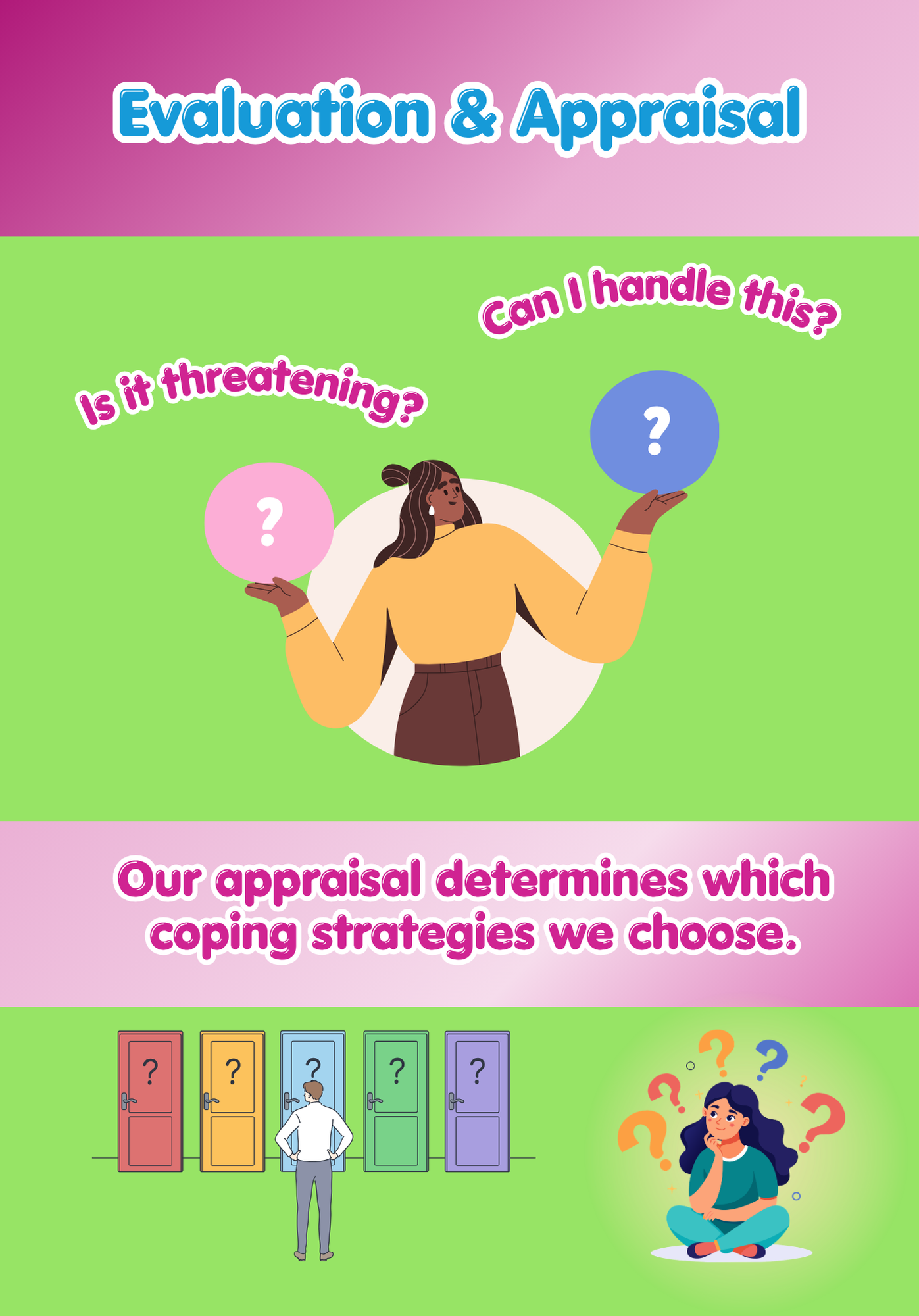
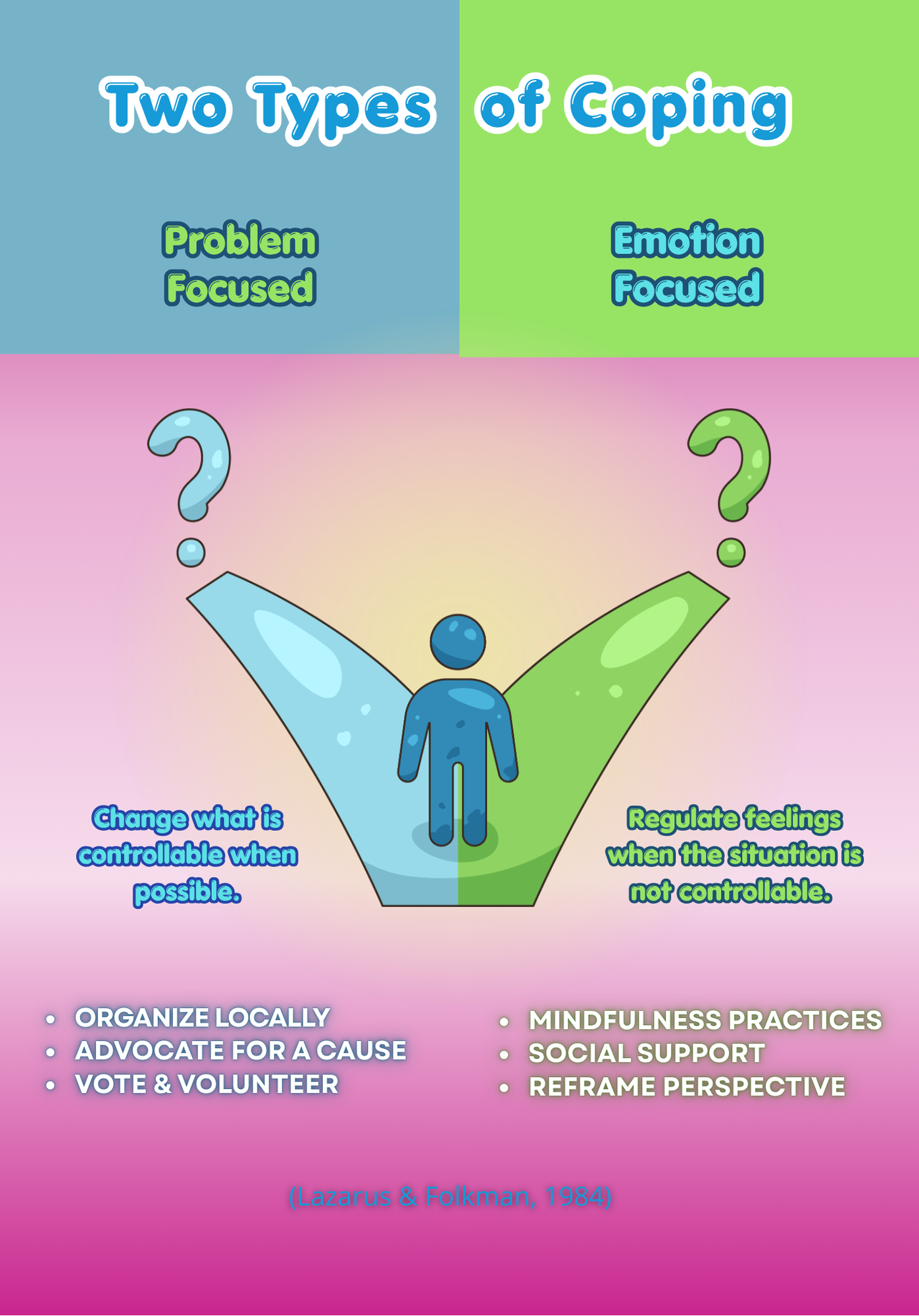
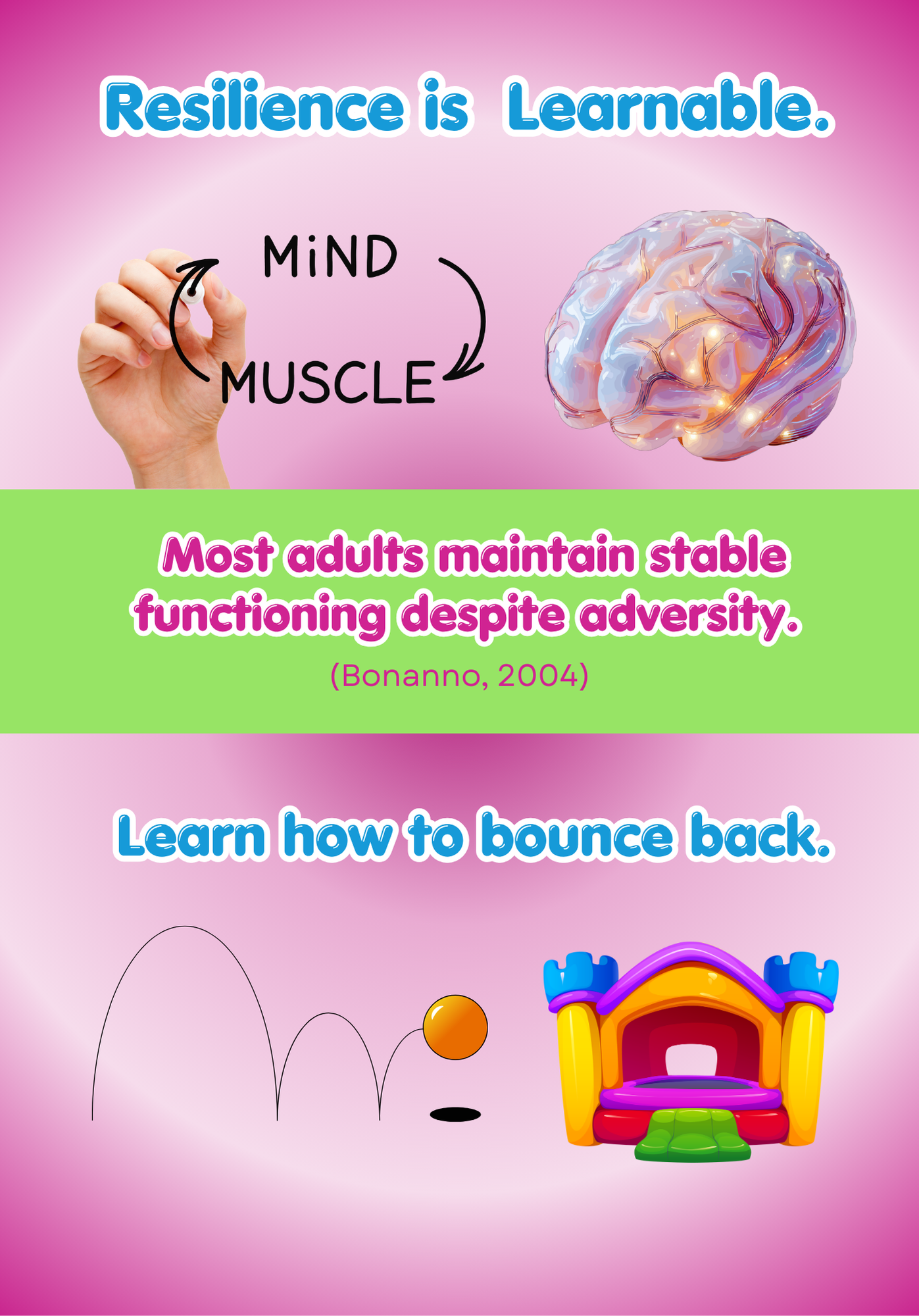
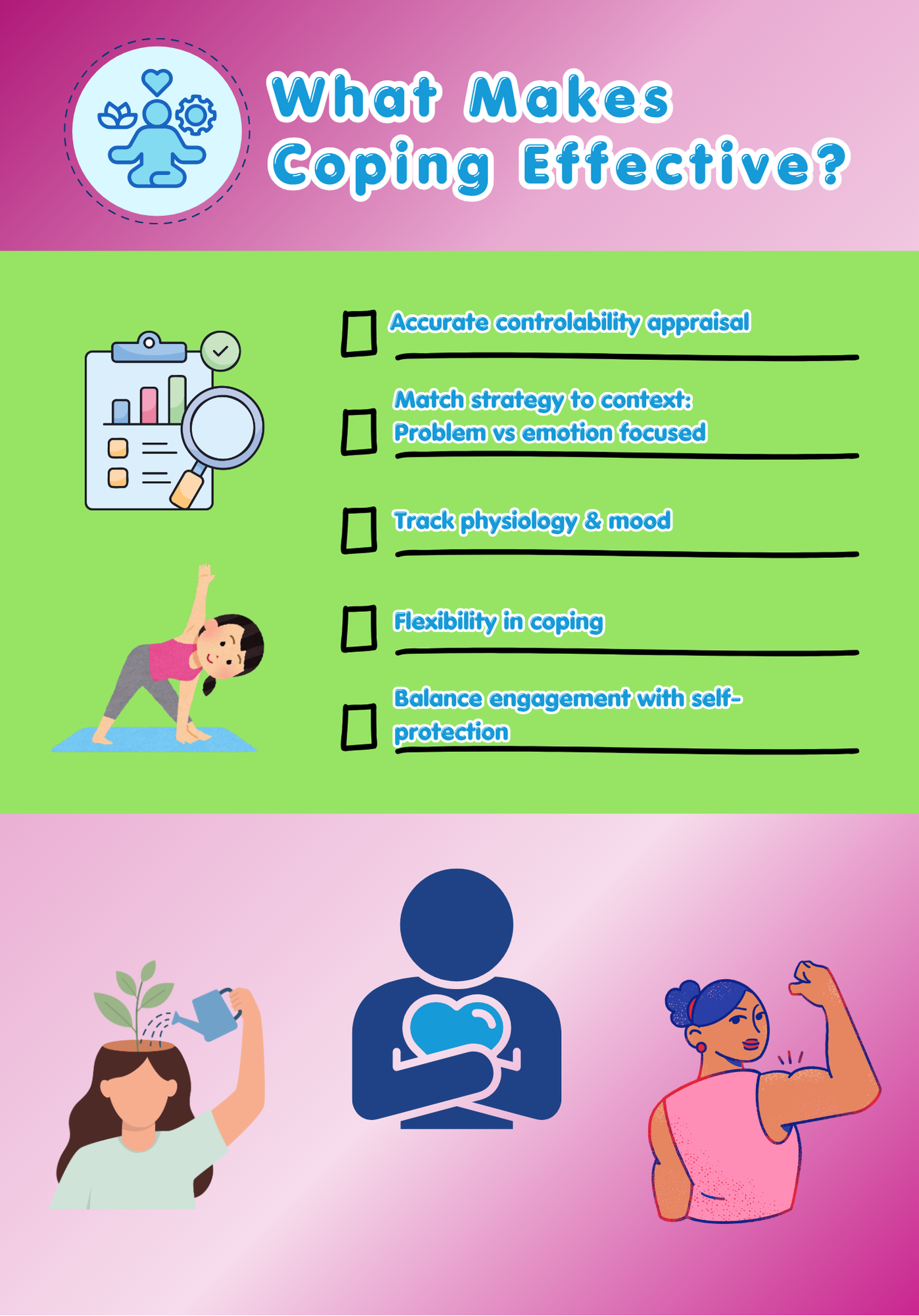
My content took a slight pivot (not by much), my original idea was to focus on “reframing perspective”. The research had a slightly different way of communicating this using terms like: two types of coping, problem-focused, emotion-focused, resilience is learnable, and appraisal. My biggest challenge was keeping it simple and leaving out details that don’t matter so much. I kept the key concepts in mind and used them to guide the project, which helped to ensure that my storyline made sense and didn’t leave people hanging.
2.How did the process of creating a static multimodal project affect your understanding of your topic? Did working within this format make you notice anything new about your research, audience, or message? Were there any aspects of your topic that were difficult to convey in a static format?
I chose this topic because it is what I am studying in both of my psychology classes. I already had a basic understanding of the concepts, and the class texts helped to direct me to the appropriate research articles. In fact, Lazarus & Folkman came up at the top of the library search, and it seems to be a key study used in my classes. Things were not difficult to convey once I switched my terminology to match the studies' terminology.
3. Who is the broad audience for your project? Who is the specific audience for your project? Reflect on how your composition and language choices were made with your specific audience in mind.
Explain a specific composition choice you made with your audience in mind. Why did you make that choice, and how do you think it impacts how your audience engages with your project?
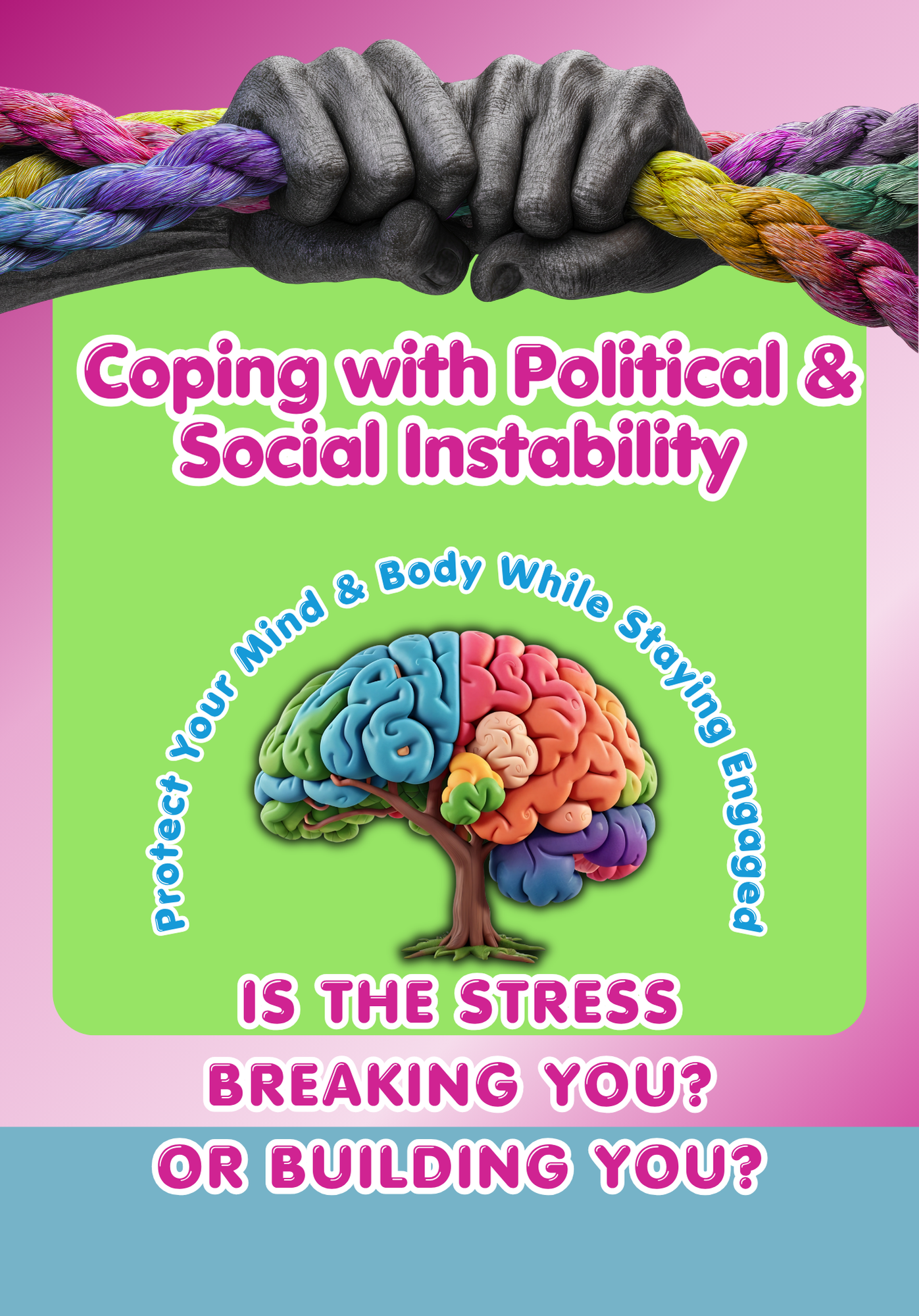
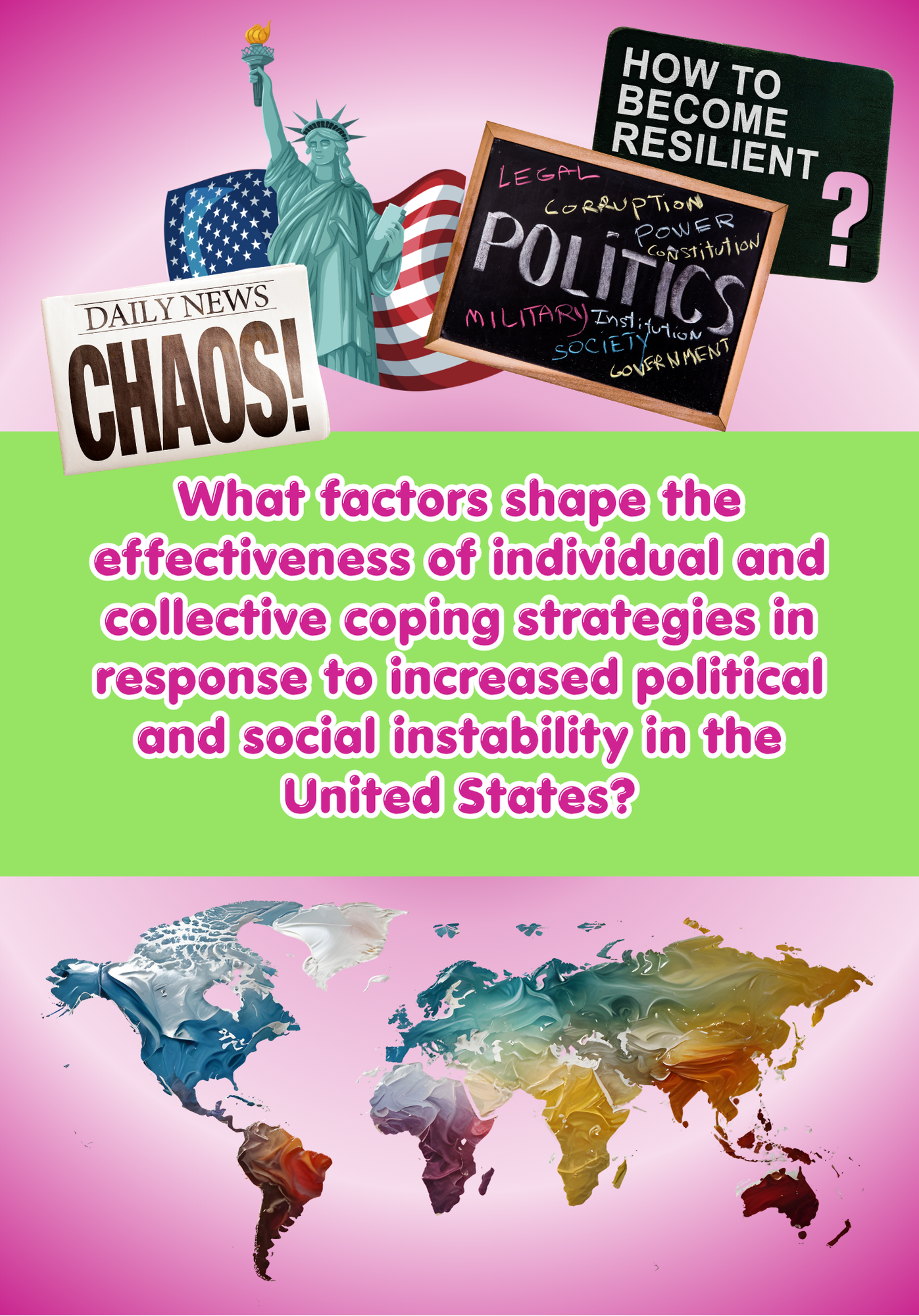
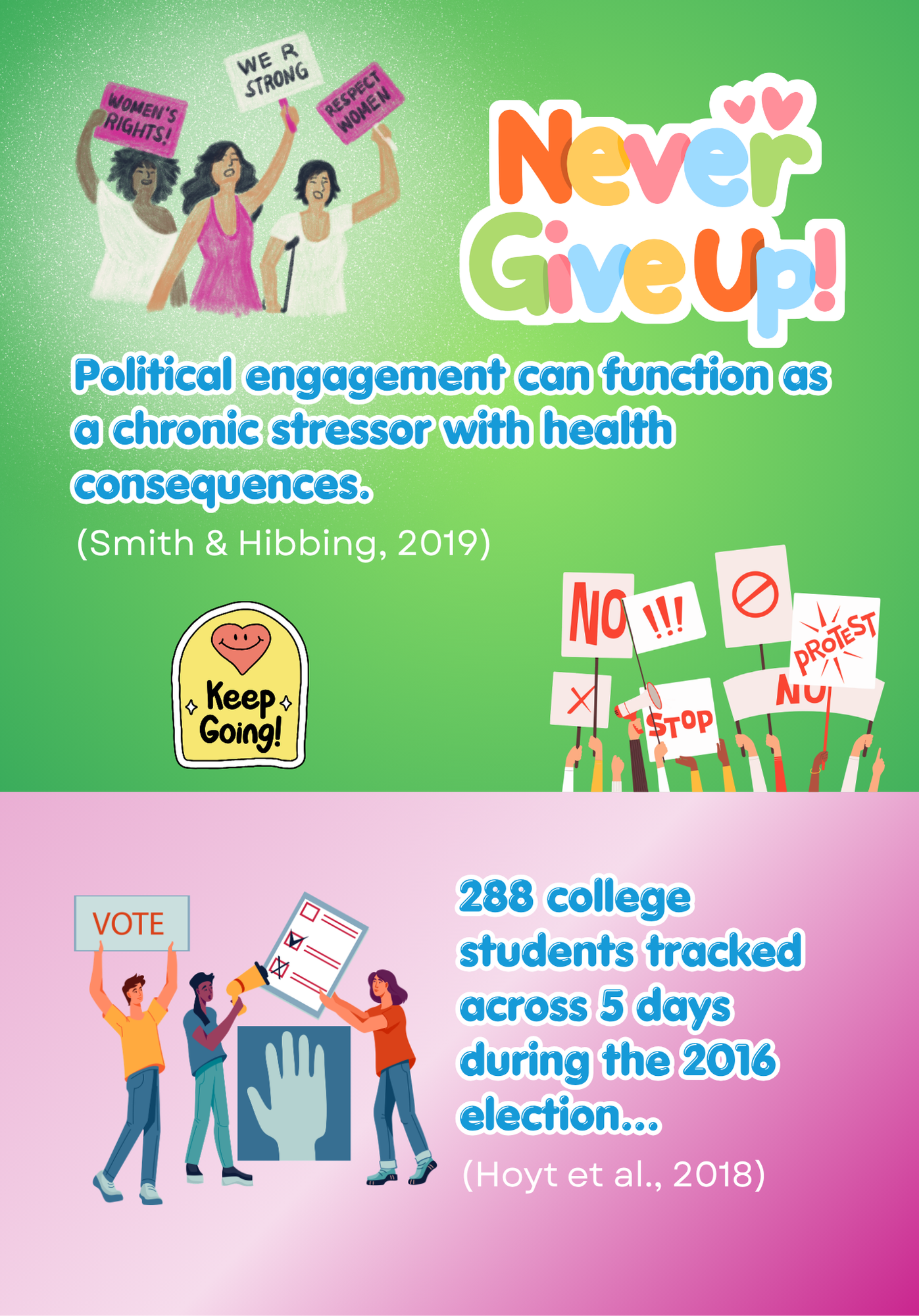
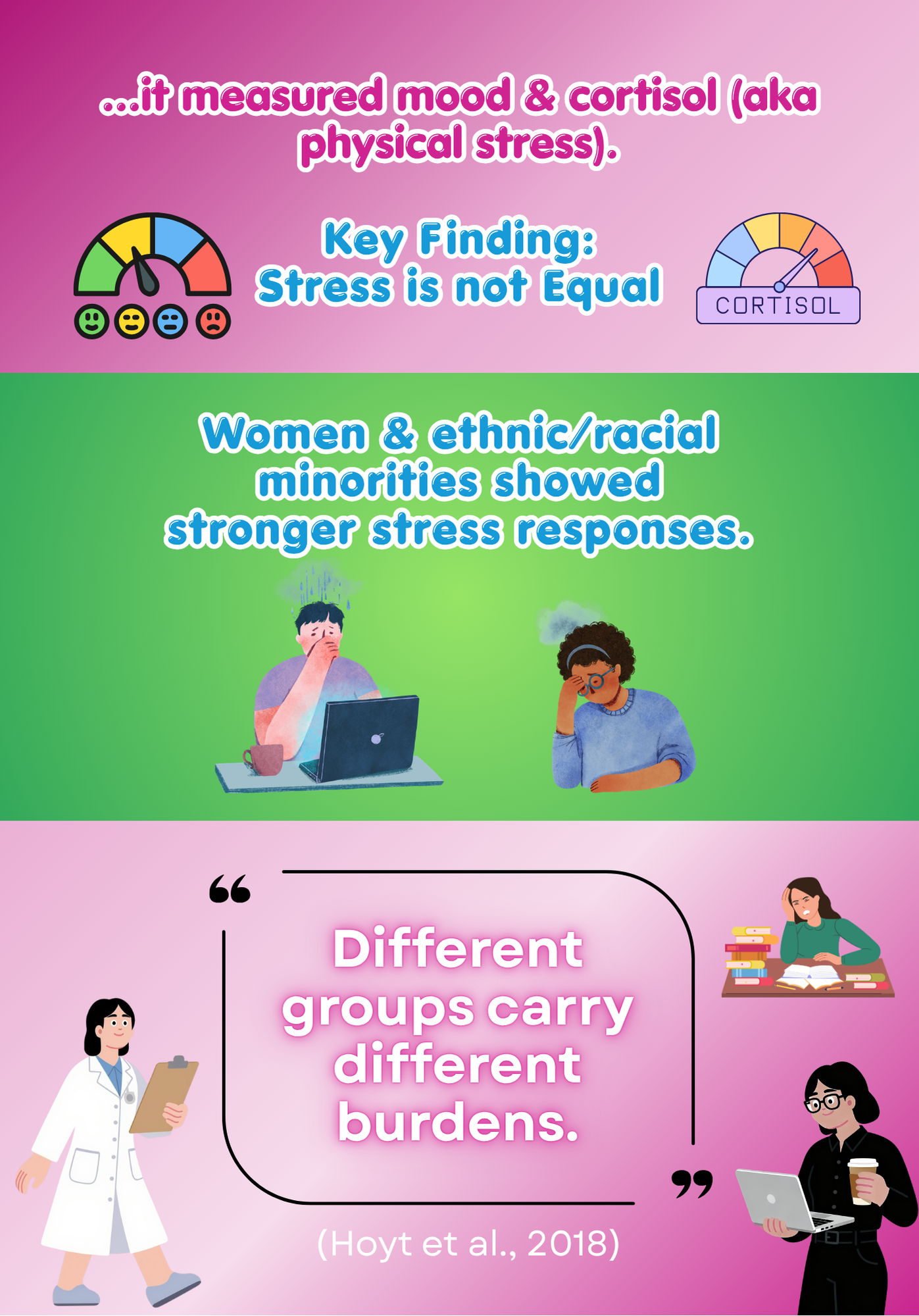
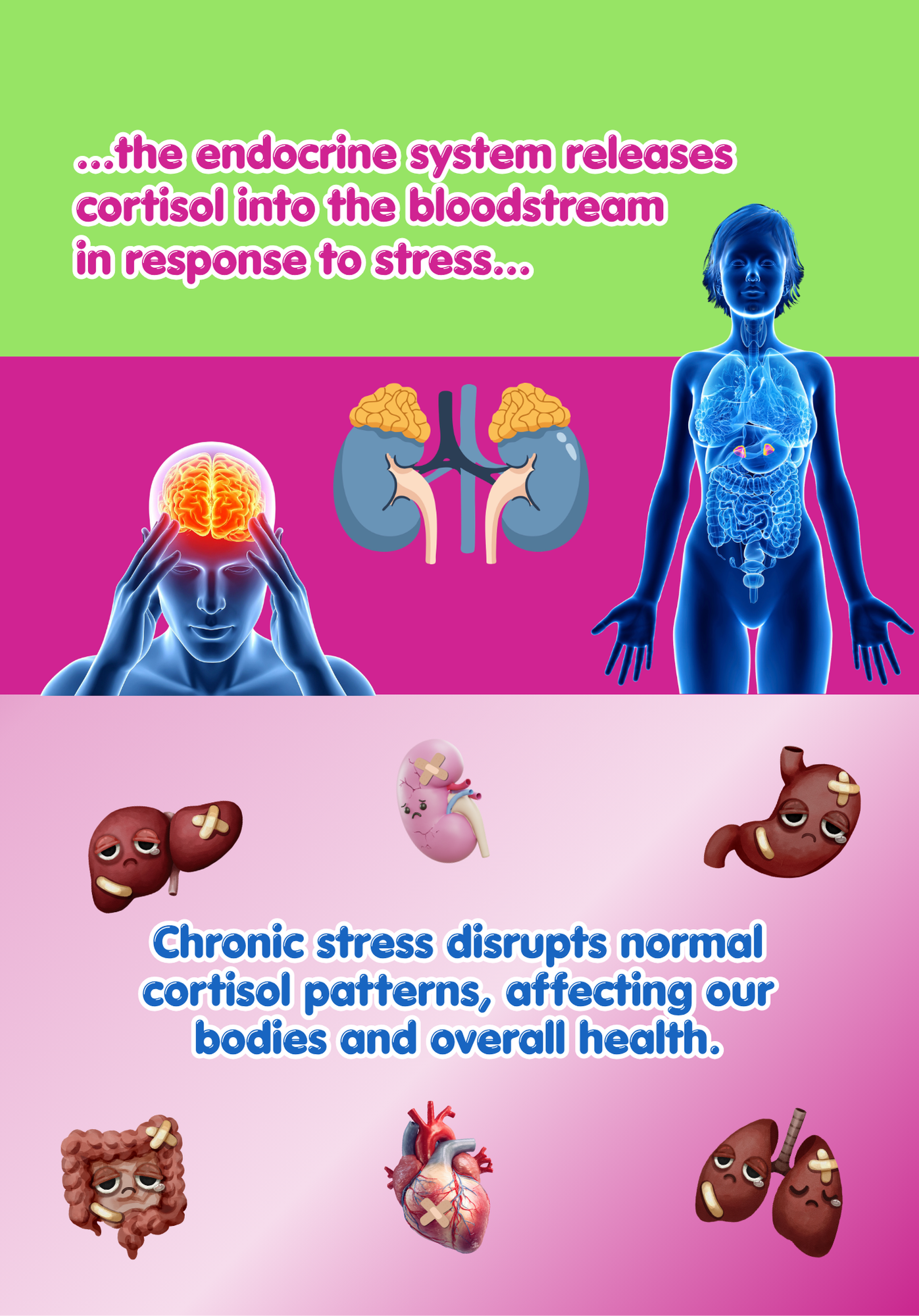
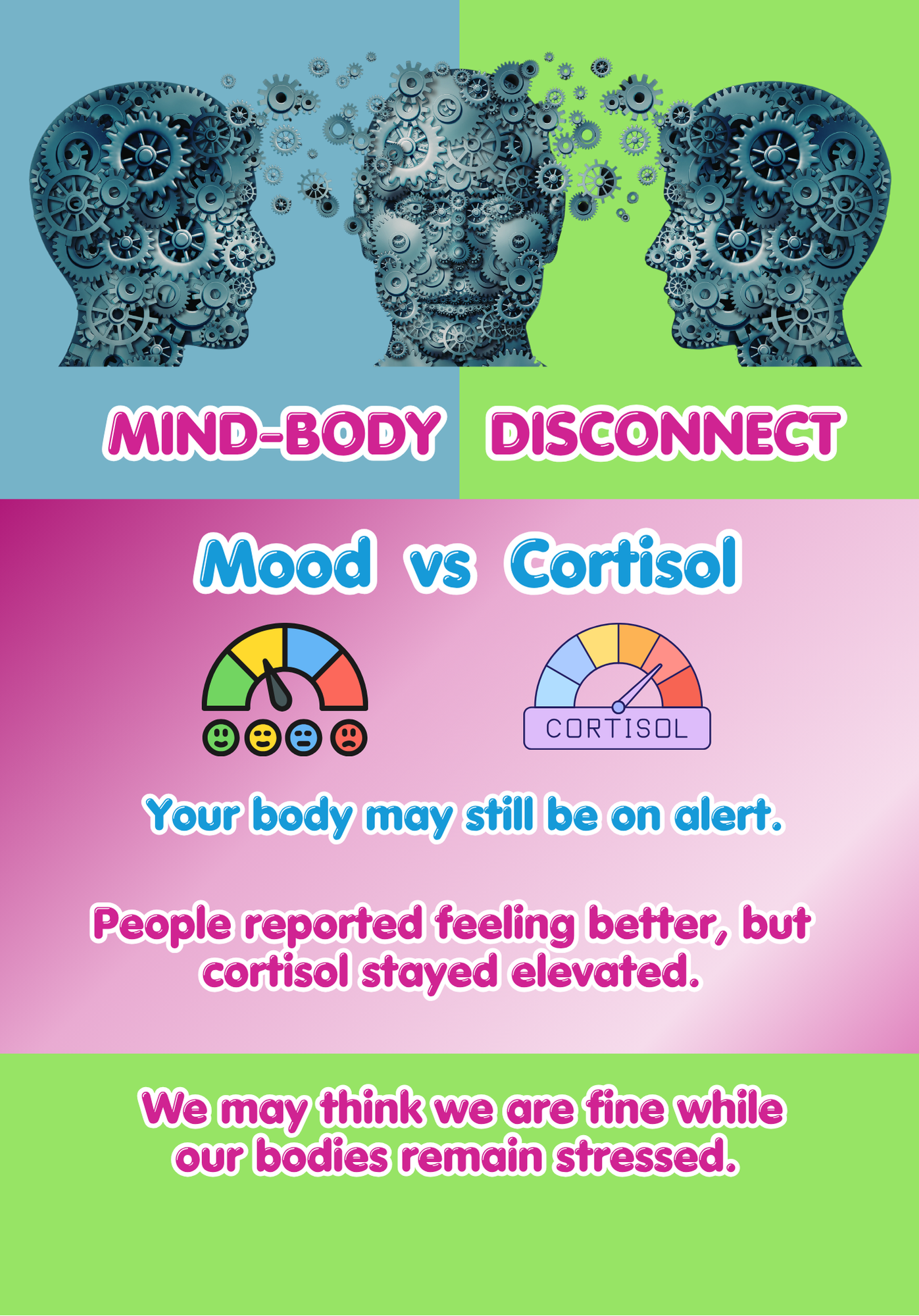
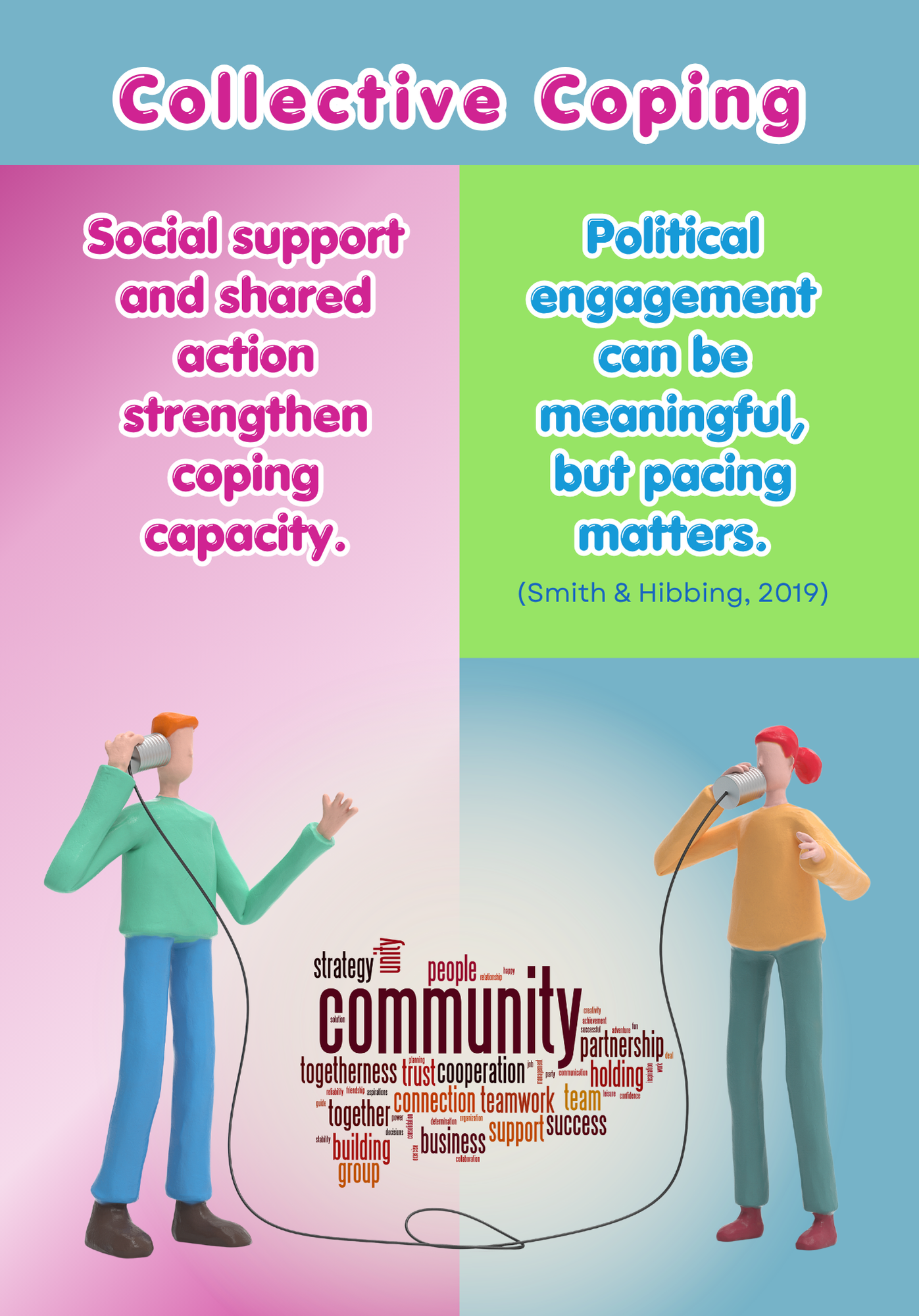
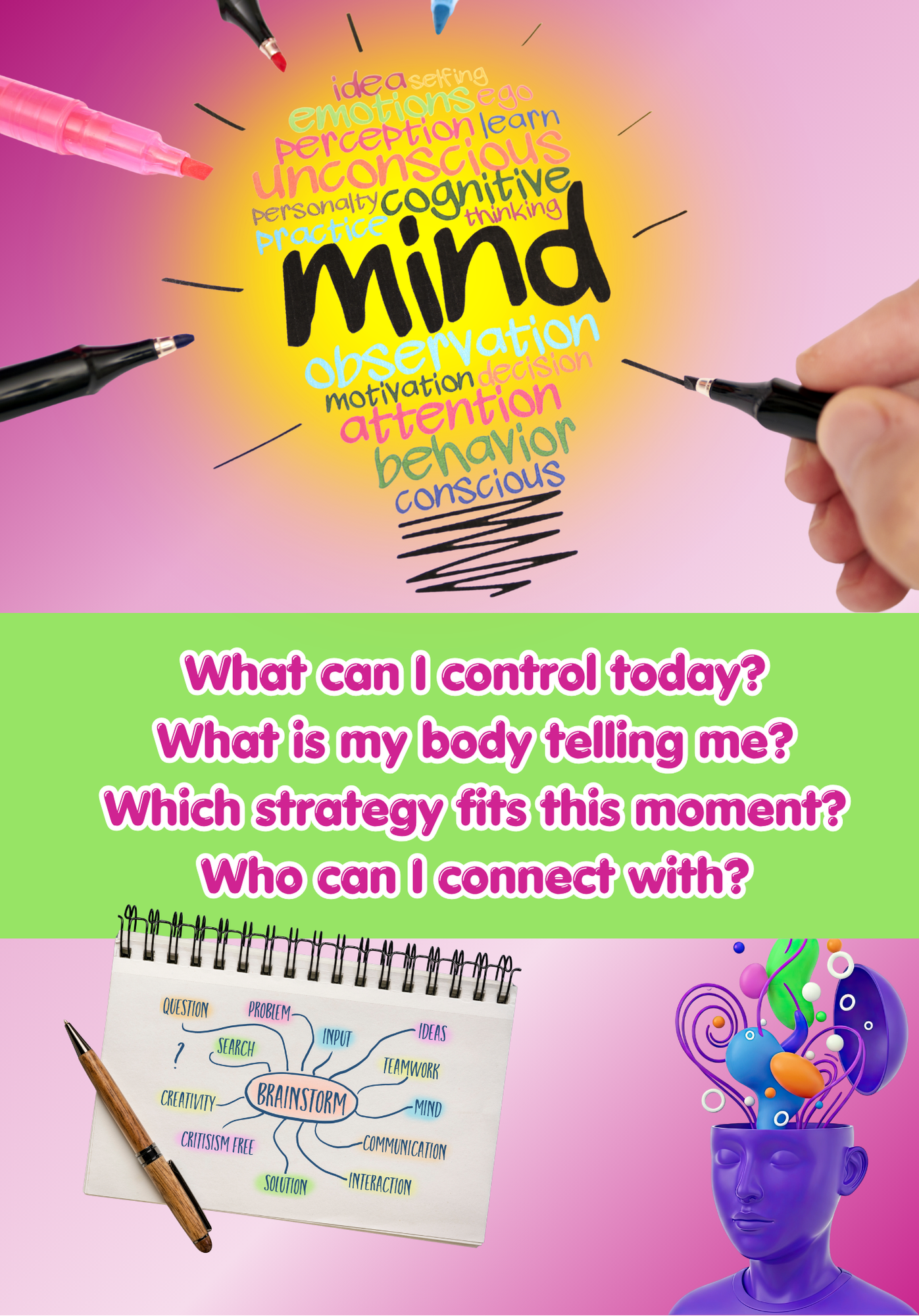
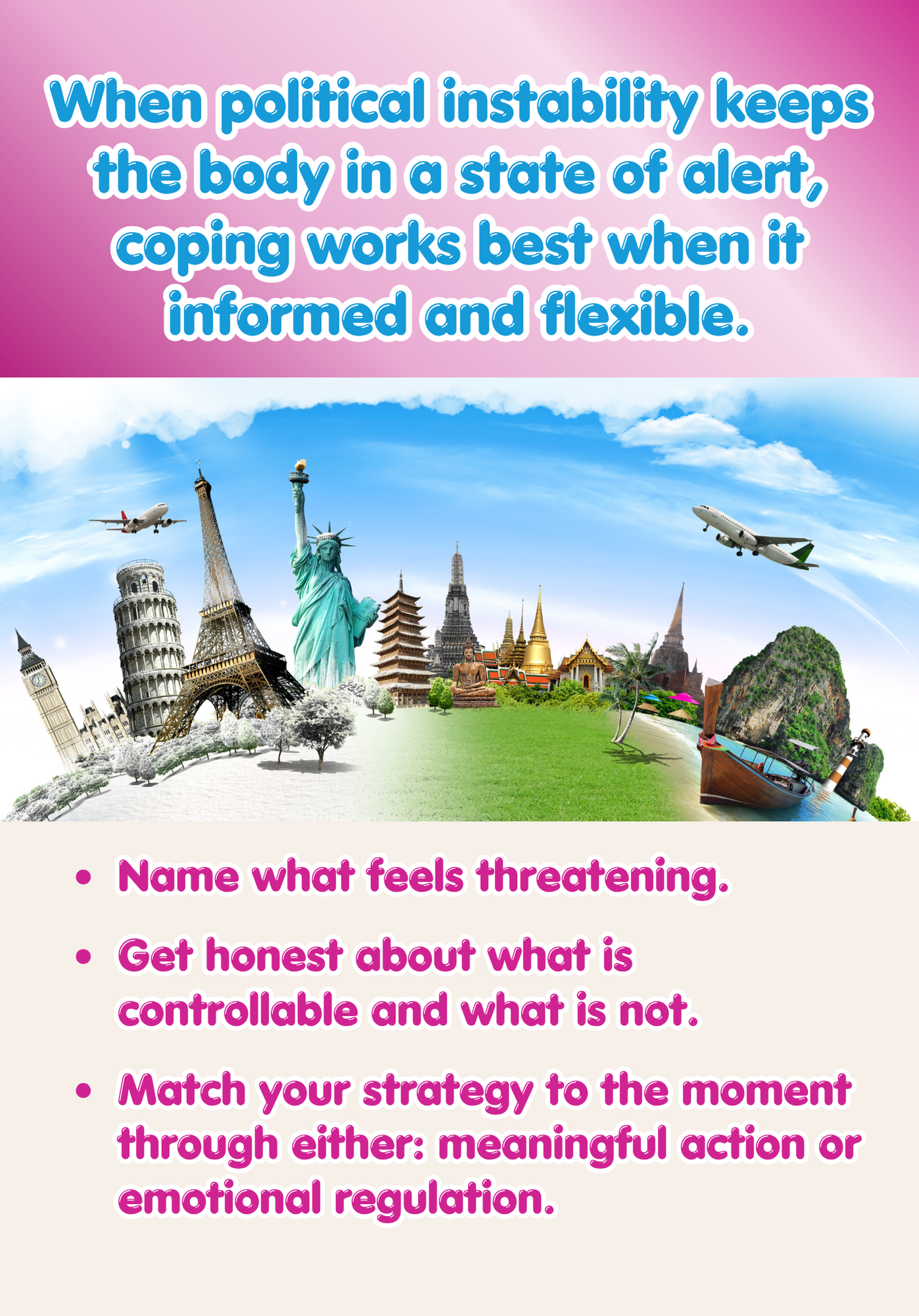
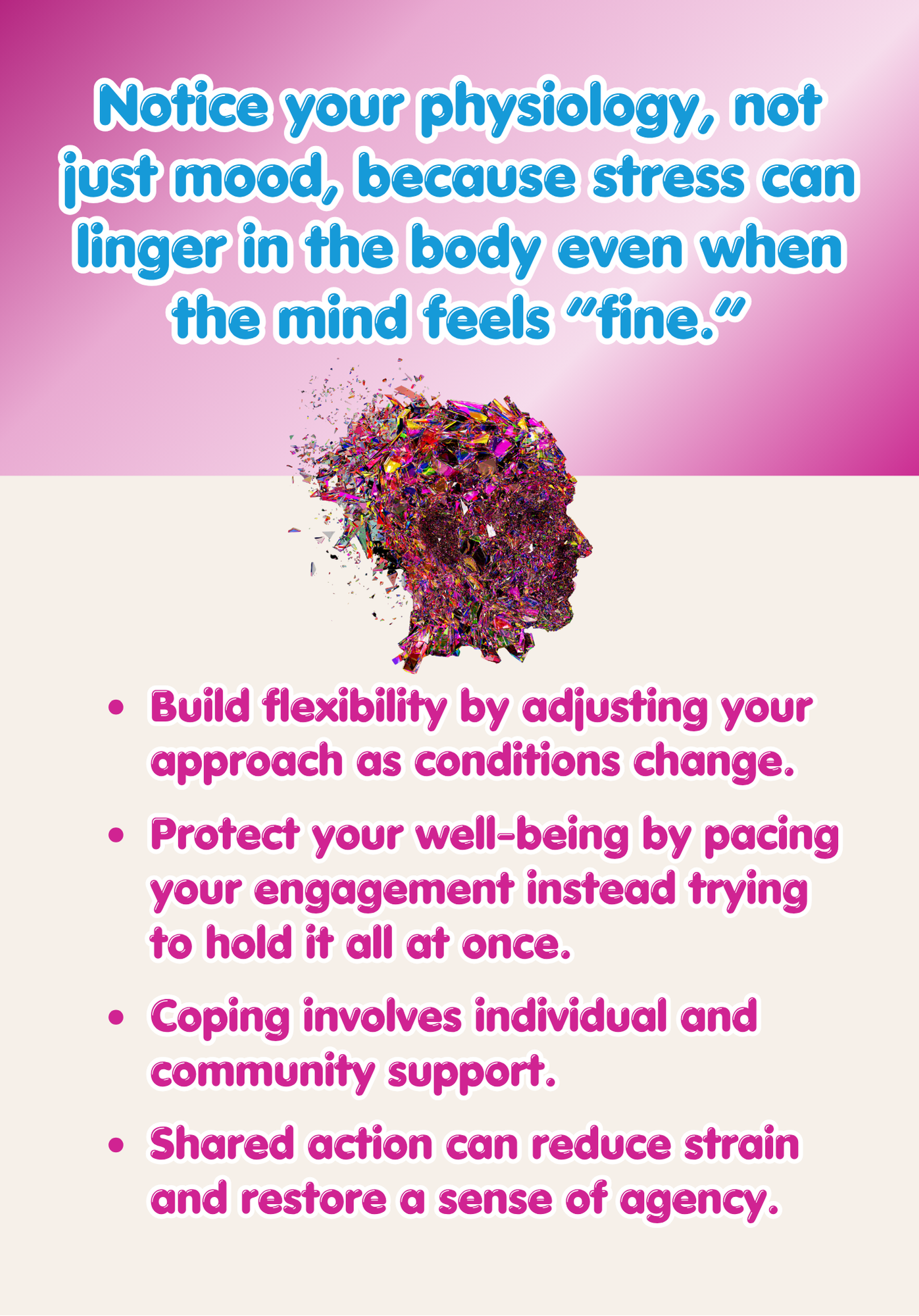
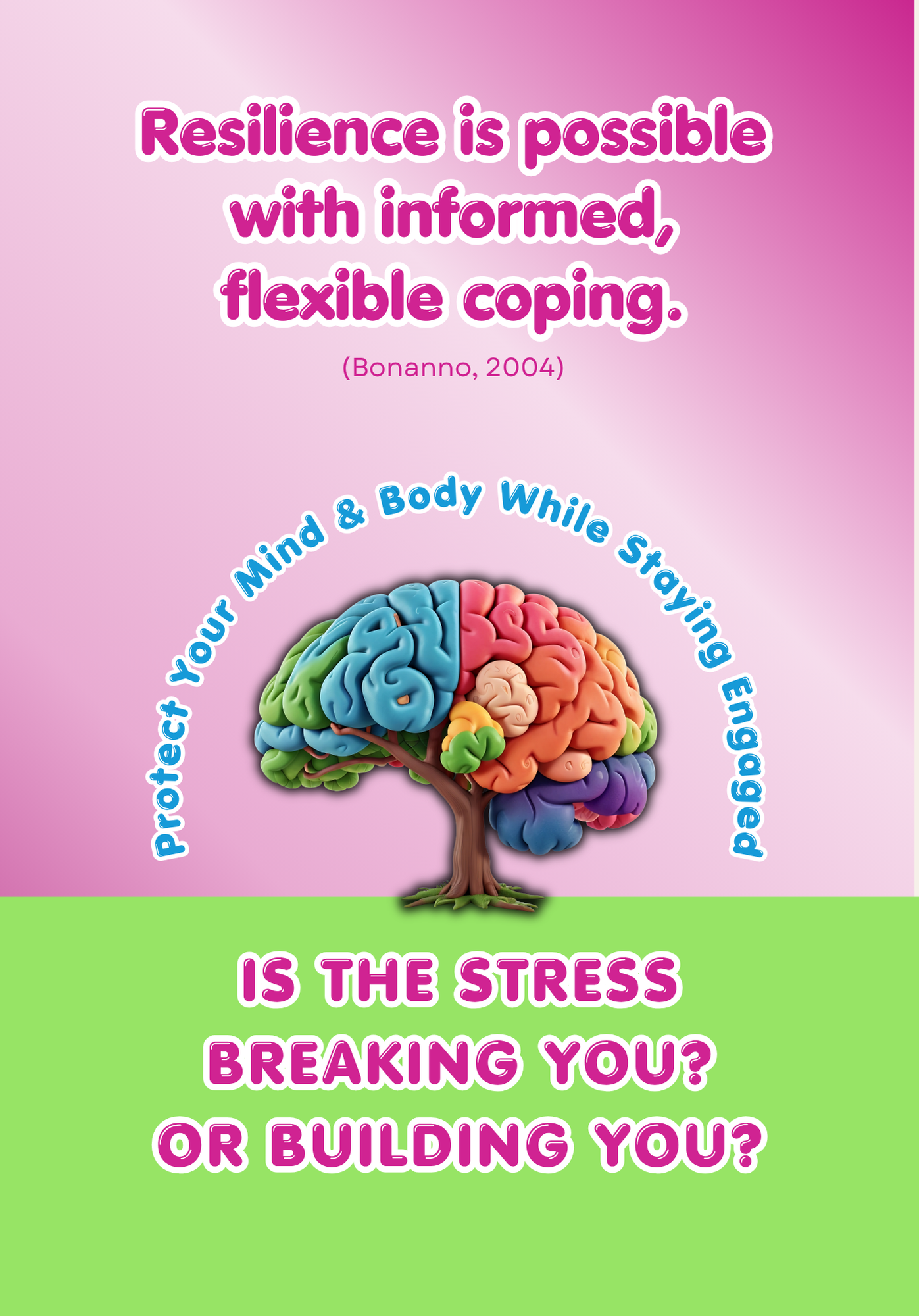
My composition choice was to make it very colorful and cheerful with simple wording that is easy to read at a glance. The worldly chaos can be depressing and I wanted people to feel uplifted and hopeful. I went with a clean collage-type format.
Explain a specific language choice you made with your audience in mind. Why did you make that choice, and how do you think it shapes your audience’s understanding of your topic?
My approach was to make this easy-peasy for anyone with zero science background. I liked the terminology in the studies because it felt clear, which is why I adopted it rather than rewording it. My hope is that the audience will feel empowered and gain tools to endure and make an impact in saving our democracy from fascism. We can do this!
4.Our English class treats language differently from other English classes you may have taken. In this class, you are not penalized for choosing to use your own variety of English rather than using Standard Edited American English. How did this affect your approach to the project? How did this affect your composition process?
This class has given me the freedom to incorporate more of a free-flow writing style, which has allowed my passion to surface organically. Having been raised by a federal court reporter (my mother), I usually tend to be more rigid in my wording and sentence structure. My mother would proofread everything when I was growing up, including the menus at the restaurant; it was somewhat of a curse for her. LOL. She would always point things out to my sister and me to make sure we understood. I miss her.
5. Your Multimodal Research Project requires critical engagement with language. Based on your research and the creation of your static project, what have you noticed about how language is used to discuss your topic? For example, what patterns in word choice, tone, or framing that shape how the topic is discussed have you observed? After thinking about and analyzing the language related to your project, what thoughts do you have about the impact of language choices on your topic?
I feel like I already addressed much of this question in my previous answers. Again, I adopted the terminology that I saw in the studies to keep things clear in both my head and the minds of the readers. Hope and positivity are needed right now to lift people up…it’s never been this bleak in this country, and we could be in it for a while, and it may just get much worse.
6.Now that you have created a static multimodal project, how do you think your chosen format shaped the way you presented your research? What were some of the strengths and limitations of this format for your project? With these considerations in mind, are you leaning toward a podcast or video for your movement-based project, and why?
I feel like this project is a good gateway project. I can use it as an outline to create my video, though I will have more room for details and explanations. I’m excited to find inspirational video clips to add in. Six minutes is a long time, and I plan to use most of it, if not all of it. Voiceovers will be used to fill in any gaps of understanding and tie things together nicely.
7.Did you use AI (such as ChatGPT) at any point in the process of creating your static multimodal project? If not, write "I did not use AI for any part of my project" and move on to the last question. If you did use AI, answer all of the following:
Which parts of the process did you use AI for? Be specific about how AI assisted in your process.
What prompt(s) did you use to generate AI responses? Approximately how many times did you prompt the AI?
How did you ensure that AI did not substitute for your own critical thinking and analysis?
What challenges, if any, did you encounter when using AI?
Do you think your project turned out differently with the use of AI than it would have turned out without the use of AI? In what ways?
What is the most beneficial aspect of using AI as a tool to assist in your process?
Are there any writing or composition skills that you did not strengthen in the composition process specifically due to your use of AI? If so, what are your thoughts about that?
I’m not sure if Grammarly is AI or not. I’ve had it on my devices for many years, though I know it cannot be trusted. Many times, I just ignore it since I already know how to punctuate sentences, etc. Sometimes I click the suggested correction because it’s faster than manually doing it. The Grammarly software keeps prompting me to upgrade to enable other suggestions, though I only have the free plan. In the past, it did help bring me up to speed with the current grammar rules that seem to have had some minor changes since the 1970s and 80s.
Oh, I did originally have AI reformat my APA citations. I needed to proofread them to make sure they were correct. I also removed hyperlinks.
8.Is there anything else you'd like your instructor to know about your project?
I enjoyed this class! The projects and the people are engaging and fun.